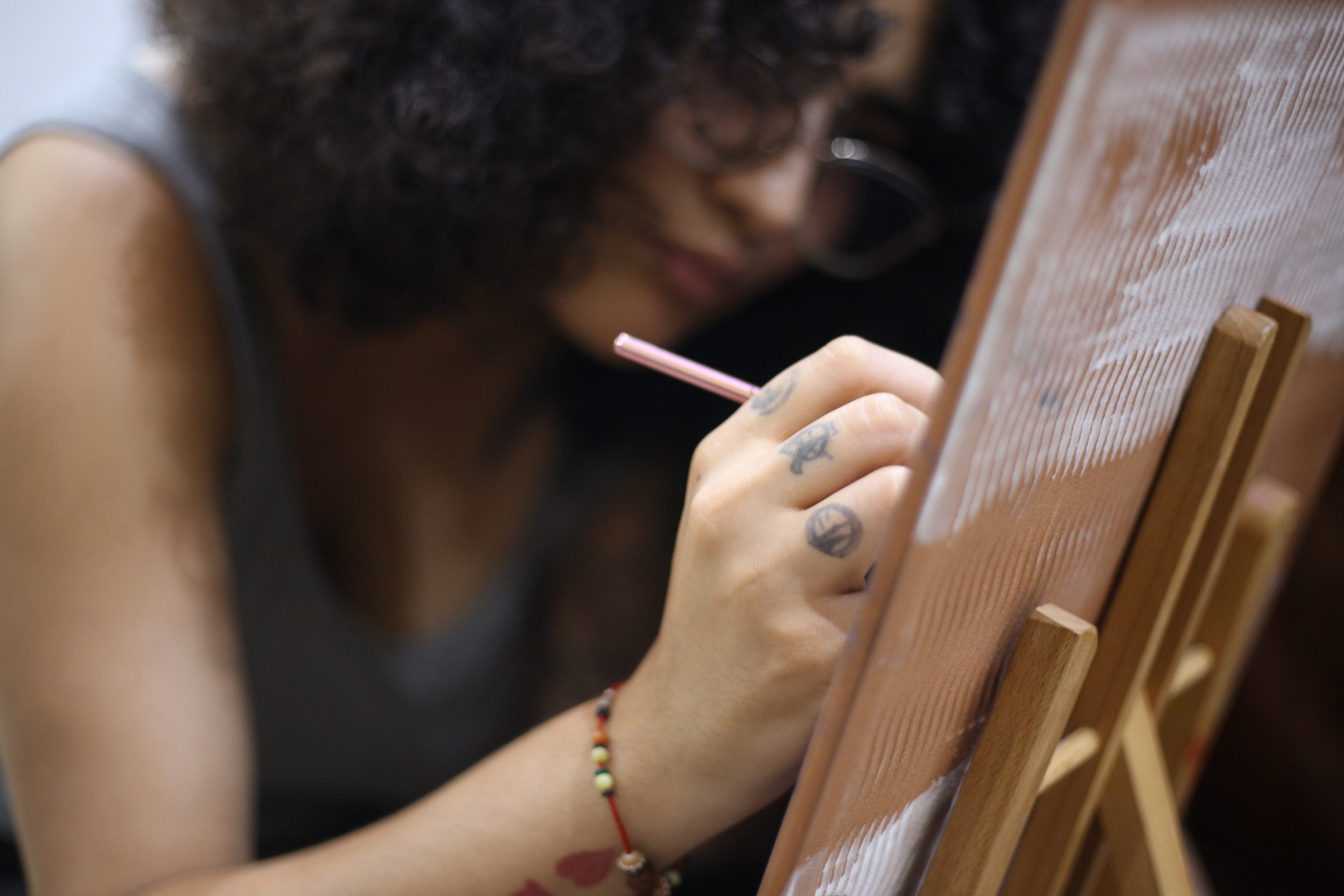
Through ritual, meditation and symbolic abstraction, the Canadian-Iraqi artist transforms every canvas into a living vessel, one that invites viewers to reconnect with ancestry, spirituality and the unseen.
There are artists who create to express themselves, and then there are artists who create to listen. For Canadian-Iraqi multidisciplinary artist Rasta Roba, painting is less about producing an image than it is about entering into a conversation with something beyond the visible. Every canvas begins long before the first brushstroke, emerging through meditation, prayer, ritual and quiet reflection until the work feels ready to reveal itself.
Currently undertaking a residency in Accra, Ghana, Rasta Roba is developing a new body of work centred around water not simply as a physical element, but as a carrier of memory, ancestry and transformation. The project reflects a practice that has become increasingly rooted in spirituality, inviting viewers to look beyond appearances and into the deeper connections that shape human existence.
“I often feel that the work begins to exist before I physically create it, my role is to become quiet enough to recognize what is trying to emerge.”
Rather than approaching the canvas with rigid plans or predetermined outcomes, she embraces intuition. Meditation, incense, prayer and silence become part of her creative preparation, allowing each painting to evolve organically. Layers are built, concealed and revealed again, mirroring the way memories, emotions and personal histories continue to exist beneath the surface long after we believe we’ve moved on. It is this philosophy that led her to describe her paintings as “living vessels.”. “They hold emotion, memory, intention and experiences,” she says. “They continue to evolve depending on who encounters them.”
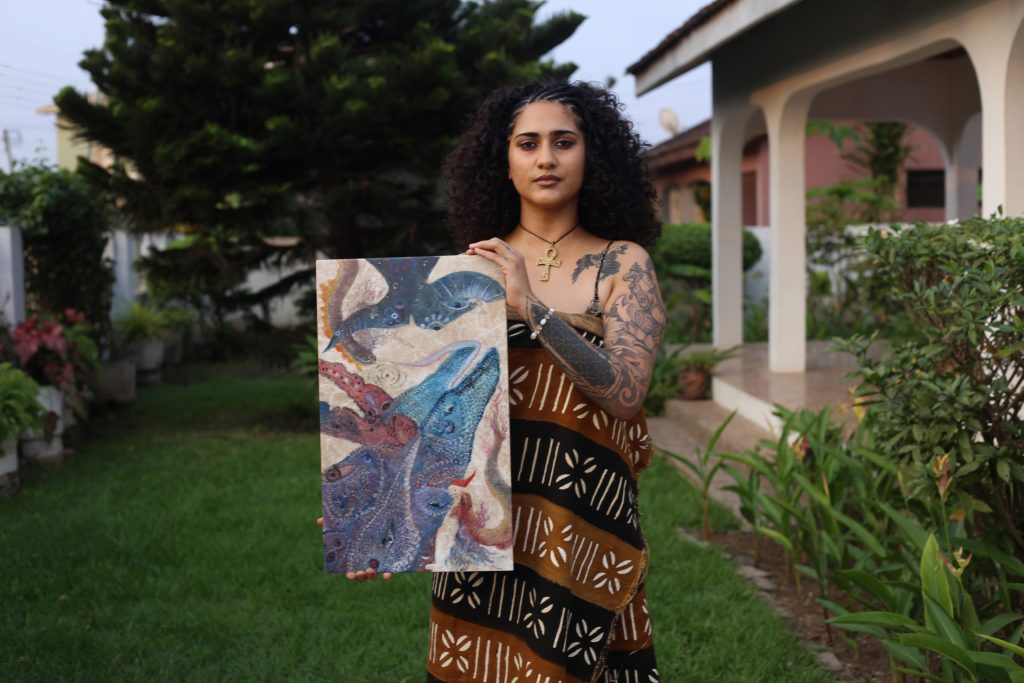
That belief sits at the heart of a multidisciplinary practice that blends painting, textiles, adornment and ritual while drawing inspiration from Middle Eastern, Indian and African visual traditions. Rich colours, intricate symbolism and powerful feminine figures become more than aesthetic choices, they become expressions of divinity, ancestry and transformation.
Growing up in Canada while embracing her Iraqi heritage and later practising Hinduism has shaped a layered understanding of spirituality that naturally finds its way into her work. Rather than separating these influences, Rasta Roba allows them to coexist, creating paintings that feel simultaneously personal and universal.
Her fascination with the divine feminine is equally expansive. Rather than portraying femininity simply as identity, she views it as a creative force, one capable of holding softness and strength, birth and destruction, intuition and resilience all at once.
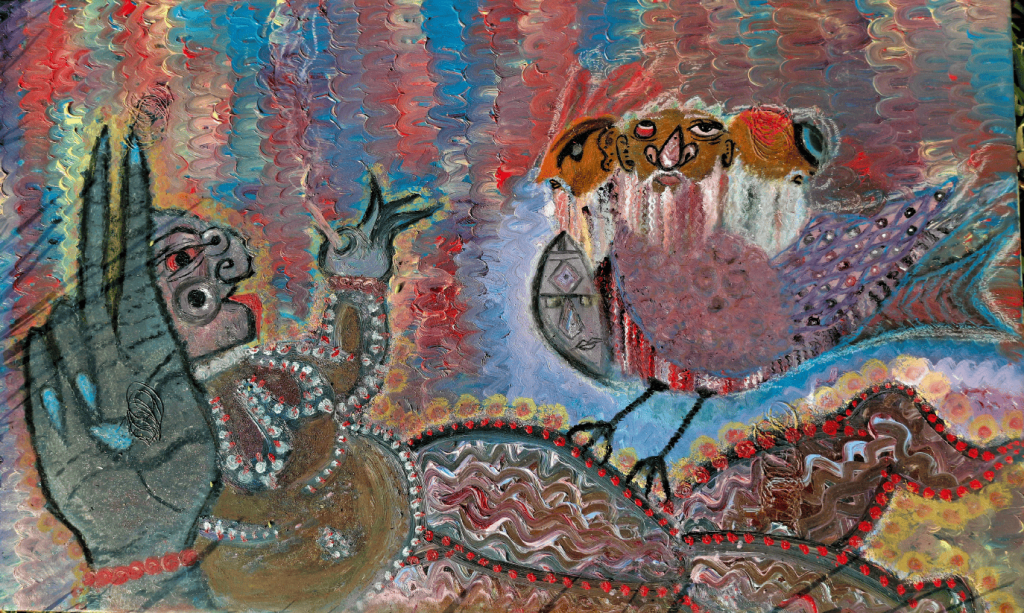
Many of her figures exist somewhere between human and deity. They resist simple interpretation, encouraging viewers to question whether they are witnessing an ancestor, a spiritual presence or perhaps even a reflection of themselves. That openness is intentional. “I don’t want to tell viewers exactly what they should feel,” she says. “The work becomes available to another person’s experience.”
While symbolic abstraction often leaves space for multiple interpretations, every decision within her practice remains deeply considered. Colours, materials and symbols all carry personal meaning, yet she welcomes the idea that each viewer will bring their own experiences into conversation with the work.
The result is art that feels less like an explanation and more like an invitation. That invitation has taken on new meaning during her residency in Accra. Water has become both subject and teacher.
Although she grew up surrounded by Canada’s rivers, lakes and changing seasons, Ghana has transformed her relationship with the element. Through spiritual cleansing rituals, meditation and experiences along the ocean, water has become a metaphor for ancestry, memory and respect. “I’ve become interested in water as both a physical substance and a spiritual metaphor,” she explains. “Water can cleanse, but it can also preserve. It can carry something away, but it can also carry something forward.” .
These experiences now influence every aspect of the residency’s evolving body of work, exploring how history flows through people in much the same way water moves through landscapes, constantly changing while remaining fundamentally connected to its source.
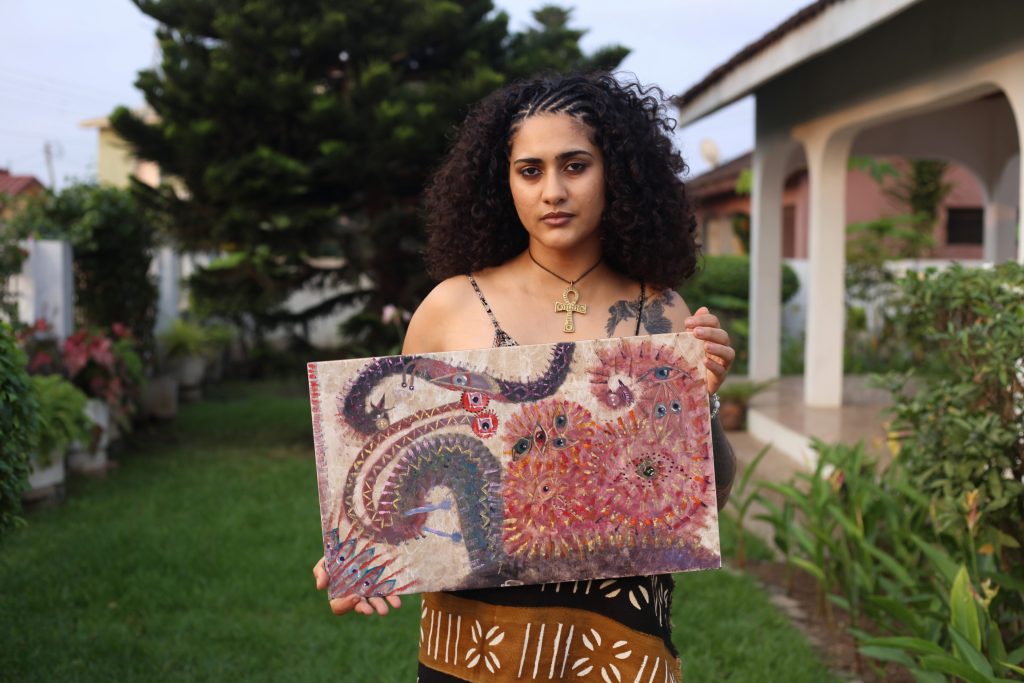
The philosophy extends beyond the studio. For Rasta Roba, creating art has become an act of listening rather than control. Spiritual practice has taught her that uncertainty isn’t something to fear but something to honour, allowing each work to become what it needs to be instead of forcing it toward a predetermined destination. “I no longer see the artwork as something separate from the process that produced it,” she reflects. “The painting carries not only the marks I make, but also the process of becoming present enough to make them.”
In an art world that often prioritises commercial success and market value, her practice offers a quieter proposition. She views every painting as an offering to her ancestors, to Source and ultimately to the people who encounter the work. Rather than providing answers, the paintings ask viewers to slow down, reflect and consider what exists beneath the surface of identity, memory and consciousness. “I hope people leave with a greater curiosity about what they cannot immediately see,” she says.
Looking ahead, Rasta Roba hopes her practice continues expanding beyond painting into immersive installations, sculpture, textiles and environments that allow people to physically experience the ideas she explores. Yet regardless of the medium, her intention remains the same: to create work that reminds people of their connection to something larger than themselves. Ultimately, she hopes her legacy will not simply be remembered through the paintings she leaves behind, but through the questions they continue to inspire. “I hope I created vessels through which something could continue moving,” she says. “Perhaps something future generations will take, transform and carry forward in ways I could never have predicted.”
For Rasta Roba, art has never been about creating objects. It is about creating spaces, spaces where memory lingers, where transformation begins, and where the invisible becomes, if only for a moment, beautifully visible.