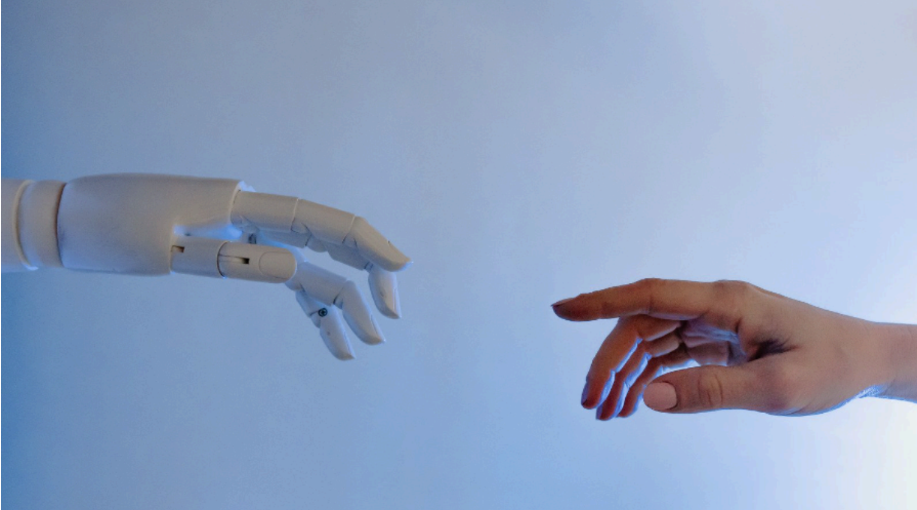
The future of Education with Artificial Intelligence
In a fast paced world where updates and upgrades in technology are almost instant we find ourselves surrounded by apps and tools for any and every situation. We have seen the development of artificial intelligence go from autocorrect to Hey Siri to ChatGPT. AI can be a powerful learning tool or a shortcut to turn in essays and assignments. This depends on the student and the learning institution’s relationship with AI. AI can be a powerful and invaluable learning tool in education; opening up students and educators to new paradigms, methods and approaches.
- Techno-Futurism
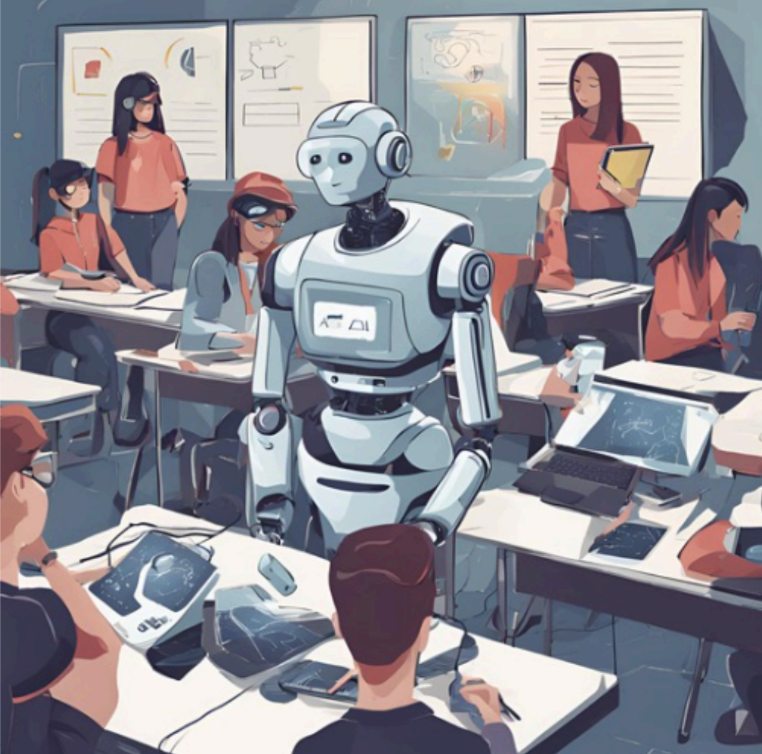
Fully embracing technology within the education space. Allowing students and educators full access to AI tools. This allows for exploration which in turn leads competency and familiarity with the programs. Thus empowering individuals to synthesize information, clear up misunderstandings, practice skills through tutorials, and discover new ideas when facing challenges. This leads to the ethical conundrum of plagiarism and cheating. The dilemma that this approach brings is that students and teachers will resort to using AI in order to complete tasks. Turnaround time becomes shorter, thus the focus falls on quantity, not quality. Generating an essay, for example, requires no thought on the part of the student. While AI may be able to do your homework, it cannot replace human curiosity. Curiosity that leads to discoveries and breakthroughs.
With all these resources at our fingertips, the question is; are there
learning tools that AI cannot replace?
The answer is, most definitely. AI cannot replace good old-fashioned
writing and sketching. Putting pen to paper is essential to the meaning making process. We learn through writing out concepts and mapping them through brainstorm sketching.
When used responsibly, AI can aid students in expanding the minds of students. For example, instead of typing an essay topic into ChatGPT, try asking the program for discussion points on the particular topic. Use the discussion points as a springboard for your research. You are likely to find new information and perspectives.
- Lock It and Block It
Blocking access to AI tools and resources and taking a more conservative approach. This means that students and likely teachers will have very little or no access to AI resources. This approach can become tedious as it requires surveillance at all times. This avenue means students are not being exposed to the available technology which will result in incompetency. The merit to this approach is that it promotes more traditional learning principles. Principles like collaboration, writing and sketching. The first two approaches are polar opposites and often trap the users exclusively in one of the corners. As the world advances we, as people, have the choice to keep up and stay informed or to reject the change and stay where we are. Like many aspects in life, there should always be a compromise.
- Vintage Innovation
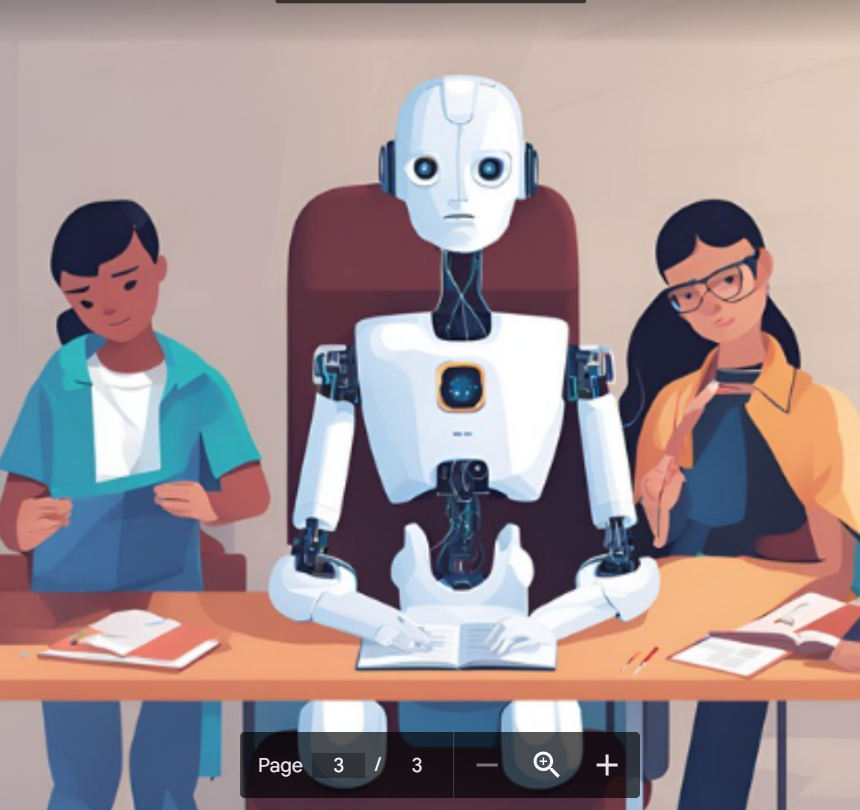
This combines traditional methods, lo-fi technology, and best practices with new skills, cutting- edge technology and new practices. Integrating technology into education means the
best of both worlds for students and their educators.
Students are encouraged to develop skills that machines lack. Skills such as empathy and collaboration. In our dynamic world, students need to be divergent thinkers. It is essential for
them to have access to new information and the latest research as well as be able to think critically and philosophically. Having lo-fi skills and the ability to solve problems and curate ideas is valuable. The future of our planet needs to move with the times, advance with
technology and add the human touch.
Over the years, innovation in technology has caused wider generational gaps. A grey English teacher instructing the class to conjugate verbs in a parrot like manner comes to mind.
Education needs to adapt in order to serve its purpose; to nurture and prepare future generations to be functional members of society, to join the workforce as well as to add value and hope to their communities. It is imperative that learning becomes and maintains a holistic approach. Combining the traditional elements of collaboration, critical thinking, conversation and creativity with computers, combined learning methodologies, media literacy, personalised learning, research skills and access to information.
Immersing and exposing students and teachers to the
latest technological advancements means that they learn and progress with the programs, tools and applications. Thus, making them adaptable and flexible in a world where technology has integrated itself into a growing number of professions and careers. Students learn the value of technology as well as the power and responsibility to wield it.
At the end of the day, would you want a robot to replace your teacher? The robot will definitely remember that it gave you homework.